










Fossil of the year
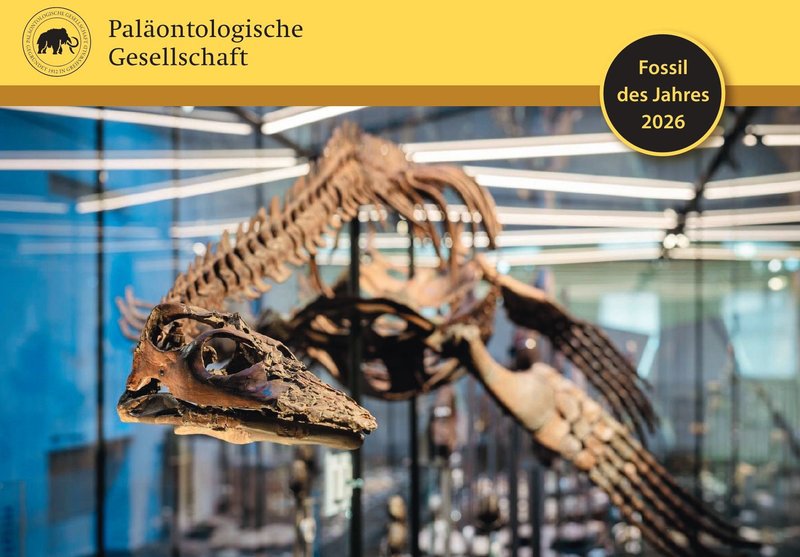
Fossil of the year 2026
Westphalian pleiosaurs
The “Westphalian plesiosaurs” comprise four genera and represent a globally unique cross-section of a special evolutionary path among vertebrates that lasted around 135 million years. On the one hand, plesiosaurs are a classic example of land vertebrates (tetrapods) that subsequently adapted to life in water, as was also the case with crocodiles, reptiles, some birds, and mammals to varying degrees. On the other hand, plesiosaurs display unique innovations.
Four skeletons, presented in three Westphalian museums, have been researched with the significant participation of citizen scientists and have been inspiring visitors to the region for years with their insights into life in the Mesozoic era. As so-called holotypes, all four fossils served to define new genera and have thus significantly expanded our knowledge of past biodiversity. A good 200 years after the first mention of plesiosaurs, the “Westphalian plesiosaurs” are bringing this fascinating group of animals into focus as the Fossil of the Year 2026.
Learn more about the Fossil of the Year 2026.
Text source: Website of the Palaeontological Society
Read here which fossils have received this title since 2008.